The Classroom Teaches Too
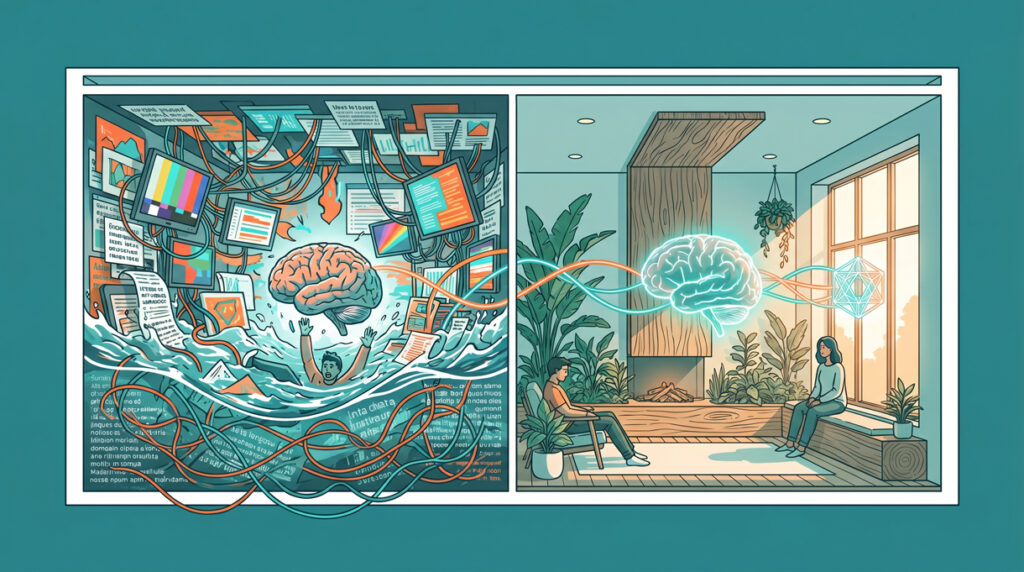
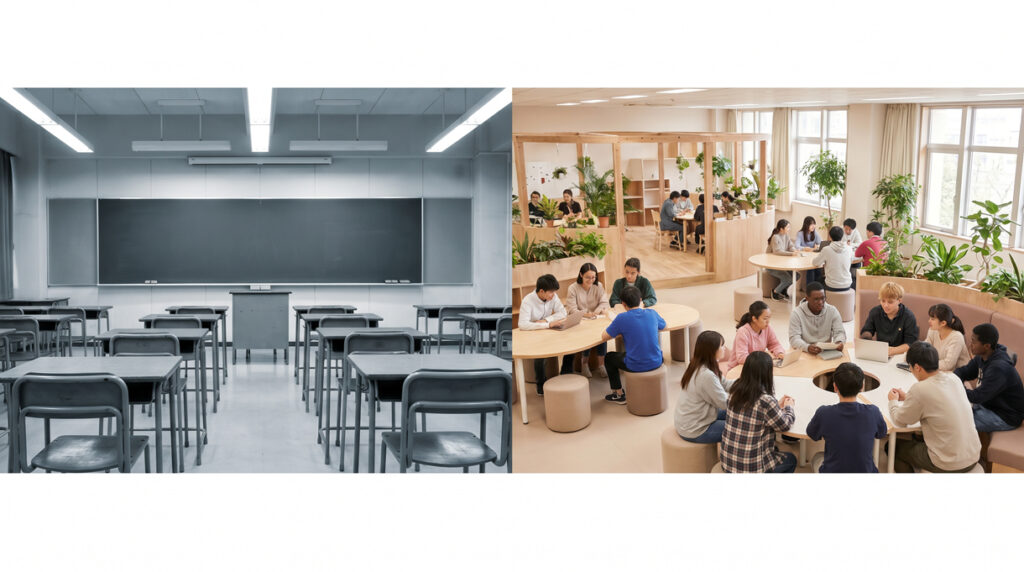
We often speak about education as though it takes place only inside the mind. We design content, assessment methods, and platforms, while treating the space as a neutral container.
It is not.
A voice lost in reverberation, a room with insufficient ventilation, or a day without changes in posture can alter what a person is able to hear, sustain, and remember. The environment does not replace pedagogy, but it can support it or work against it.
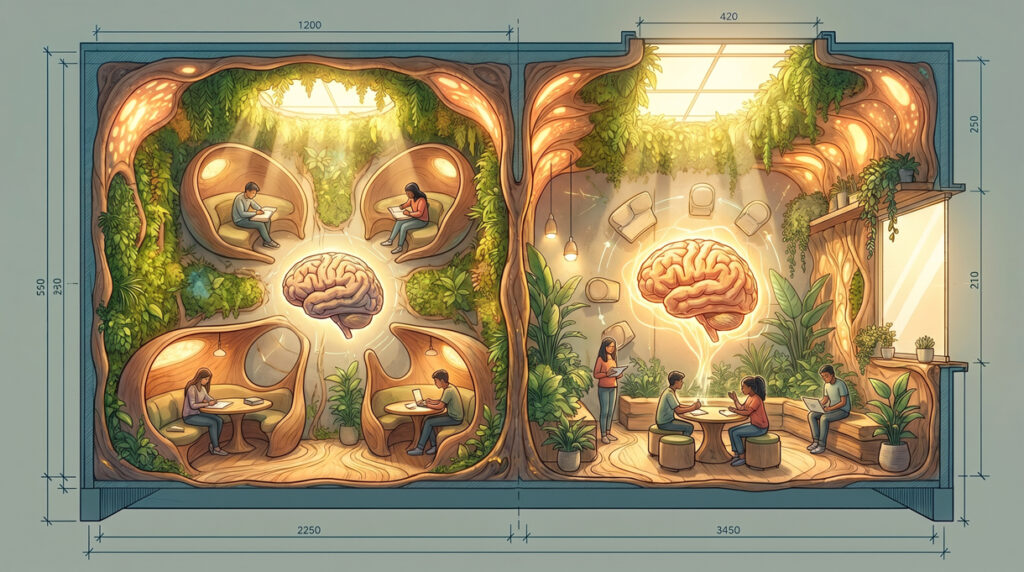
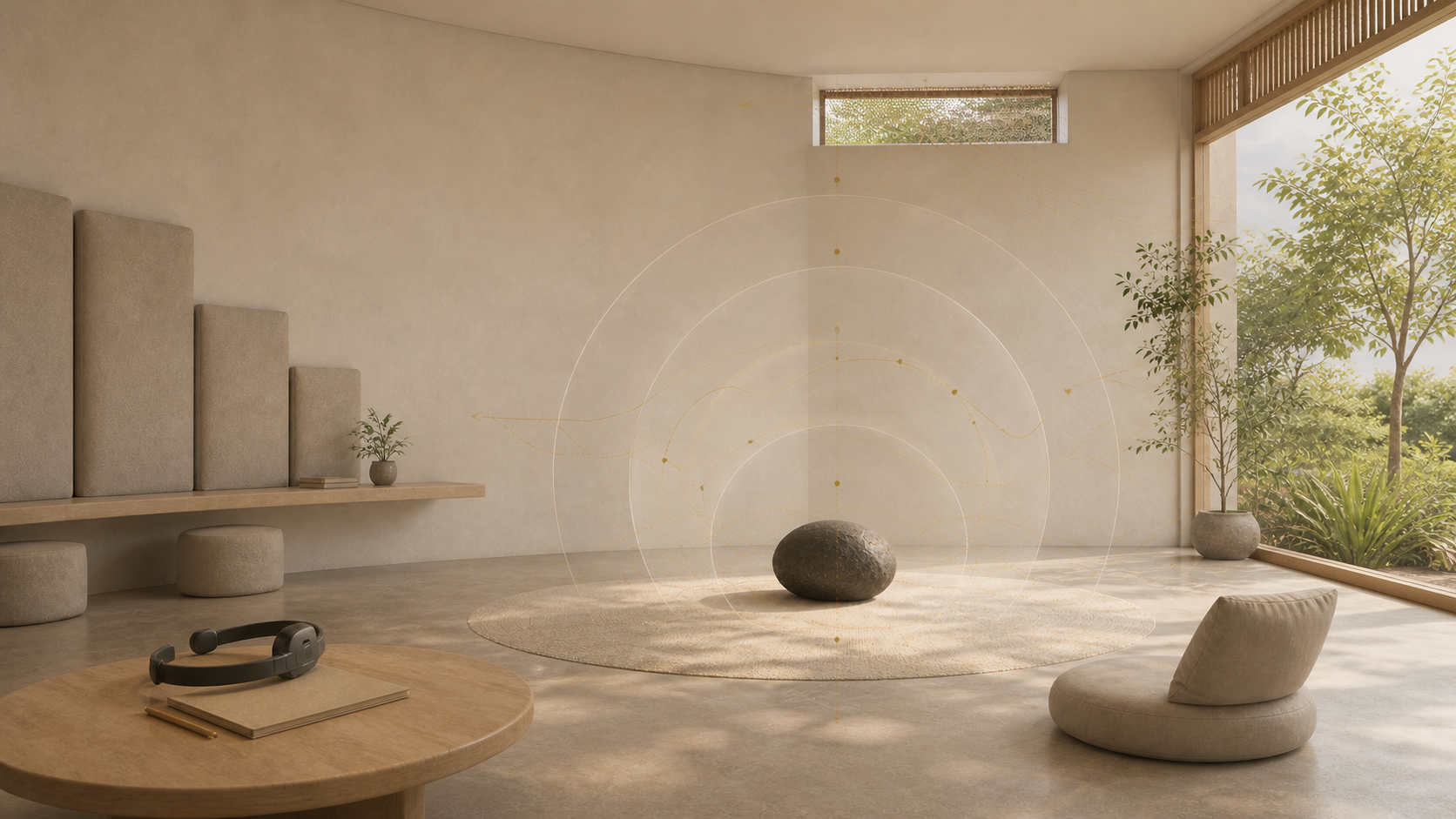
This is the premise of the GRAVYA Habitat: designing cognitive, environmental, and developmental conditions that allow thought to gain depth.
Air: making the invisible observable
In a study conducted across 20 mechanically ventilated third- and fourth-grade classrooms, 417 students completed 2,366 concentration tests. When approximate ventilation increased from 5.2 to 9.6 liters per second per person, speed improved—although accuracy did not—across four numerical tests.
Other prospective studies have found associations between higher ventilation rates and better academic outcomes, although effect size and causal certainty vary by design. Carbon dioxide can serve as a practical indicator of occupancy and ventilation, but it should not be treated as a complete measure of “cognitive air quality.” Particles, temperature, humidity, indoor sources, and outdoor conditions also matter.
For a learning habitat, the responsible conclusion is not to promise that a specific threshold will raise grades. It is to establish a discipline of observation: measure, ventilate, document, and adapt before demanding prolonged attention.
Sound: hearing words is not always understanding
An experiment in a simulated classroom compared combinations of reverberation—0.6 and 1.5 seconds—and signal-to-noise ratios of +10 and +7 dB during discussion and lecture activities. Increasing noise and reverberation significantly degraded children’s comprehension on extended tasks. The difference was less visible on simple sentence-recognition tests.
This nuance is crucial. A room can allow students to recognize individual words while still making it difficult to follow an explanation, integrate several voices, or sustain a complex conversation. Acoustics particularly affects the activities GRAVYA treats as central: listening, contrasting, and constructing meaning with others.
Acoustic design does not require absolute silence. It requires intelligibility, reverberation control, and zones with distinct purposes: conversation, individual work, presentation, and pause.
Movement and breaks: changing state in order to return
Reviews of active classroom breaks in primary education offer promising, but not definitive, results. One review of 16 studies involving 3,383 participants between the ages of 6 and 13 found positive or nonsignificant effects—and no negative effects—on attention and related outcomes. Selective attention showed benefits, although heterogeneity and risk of bias were high.
A more recent review of 22 studies also found favorable signals in classroom behavior, executive functions, and physical activity, together with an explicit need for more robust research.
GRAVYA therefore does not present the break as a miracle technology. It uses it as regulation: interrupting long sessions, changing posture, breathing, walking, or looking into the distance to recover attentional availability.
The three layers of the GRAVYA Habitat
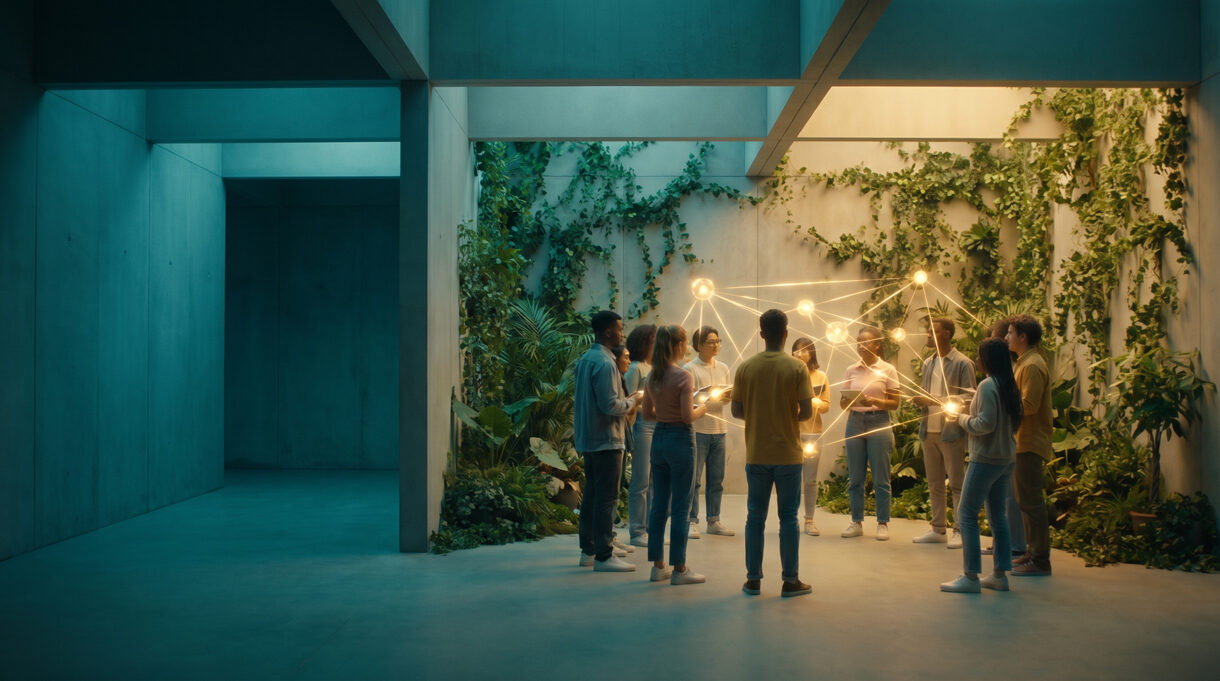
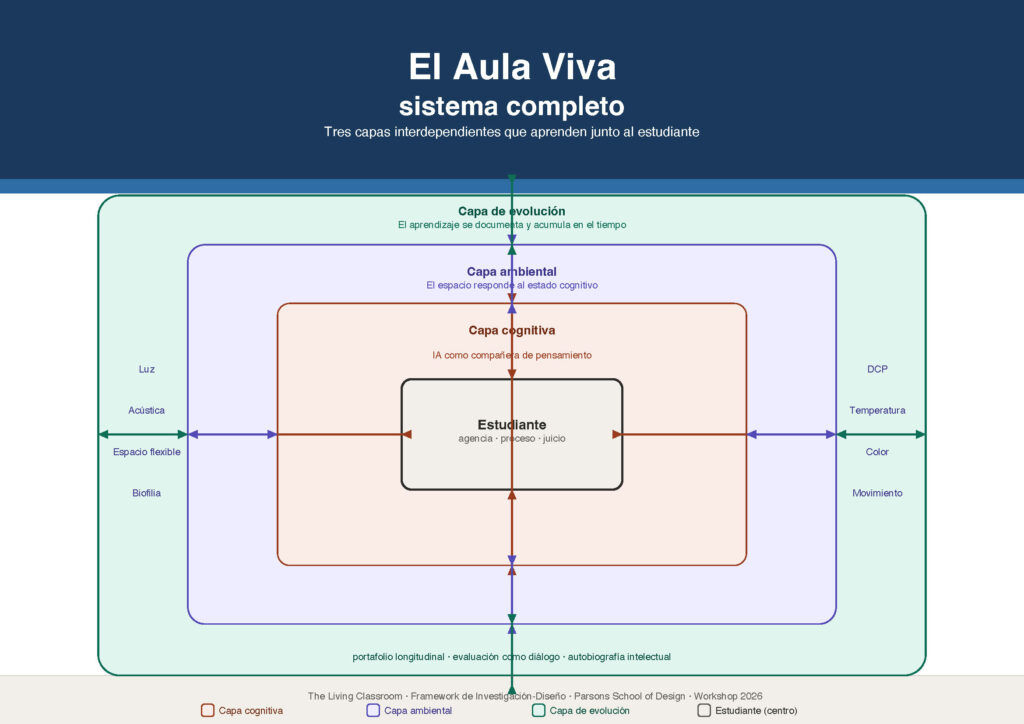
The system can be described through three connected layers:
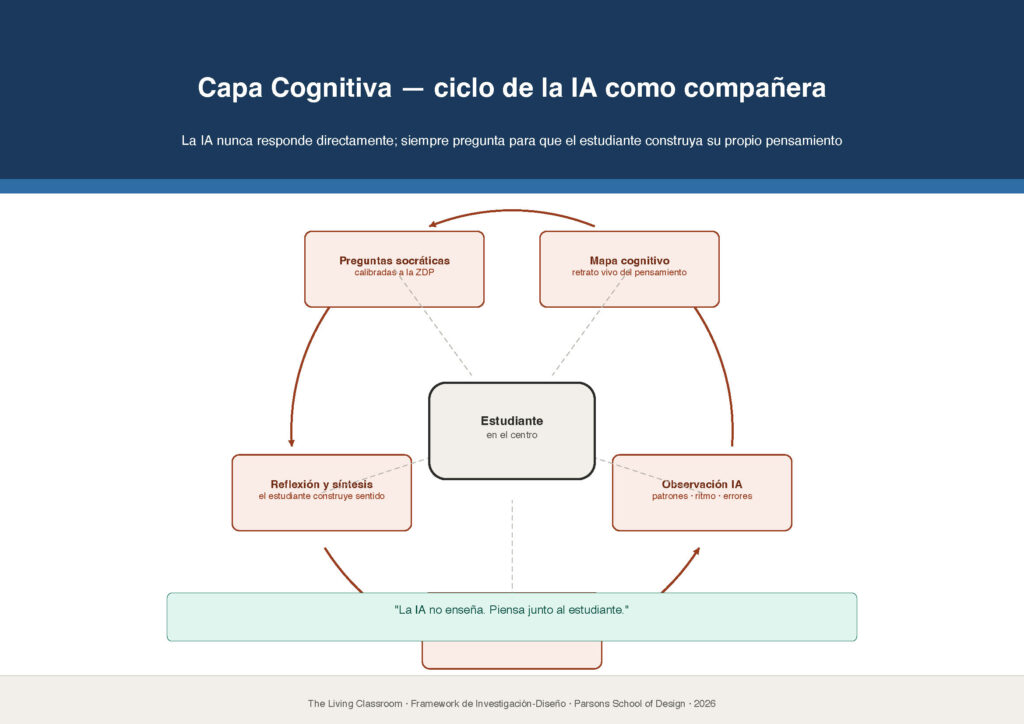
1. Cognitive layer
Conversation with people and AI, questions, source comparison, and retrieval practice. This layer designs what learners do with their attention.
2. Environmental layer
Air, temperature, light, acoustics, furniture, and the possibility of movement. This layer designs the physical conditions that support or interrupt cognitive activity.
3. Developmental layer
Learning journals, portfolios, formative assessment, and longitudinal review. This layer turns learning from a moment into an observable trajectory.
No layer is sufficient on its own. A good interface cannot compensate for a hostile room; a beautiful room does not guarantee a good conversation; an inspiring session disappears if it leaves no memory or review.
Where does a consumer EEG device such as MUSE belong?
A consumer EEG device can be included in an exploratory role to observe signal trends during breathing, attention, or transitions between activities. But its place must remain modest and ethically bounded.
It does not “read thoughts,” diagnose learning quality, or justify classifying students. Its signals are sensitive to movement, sensor contact, and other artifacts. Within GRAVYA, a reasonable role would be to support consensual research: compare states within the same person alongside self-report, performance, and environmental conditions—without turning a physiological metric into a verdict.
The data accompanies the conversation; it does not replace the learner’s experience.
A minimum dashboard for the habitat
A GRAVYA Habitat pilot could record:
- CO₂ as an operational ventilation indicator, together with temperature and humidity;
- sound level and, where possible, reverberation time;
- the duration of work blocks and breaks;
- brief self-reports of attention, effort, and comfort;
- performance on a retrieval or transfer task;
- qualitative notes from the teacher or facilitator;
- EEG signals only in voluntary, exploratory protocols.
The goal is not to produce more data. It is to discover which adjustments support clearer conversation and more autonomous learning.
The habitat is not a technique. It is an architecture of thought.
Question for the community: If you could change one condition in the space where you learn or work, which one would have the greatest effect on your attention?
References
- Twardella, D. et al. (2012). Effect of classroom air quality on students’ concentration: results of a cluster-randomized cross-over experimental study.
- Valente, D. L. et al. (2012). Experimental investigation of the effects of the acoustical conditions in a simulated classroom on speech recognition and learning in children. Journal of the Acoustical Society of America.
- Masini, A. et al. (2021). Active Breaks and Students’ Attention: A Systematic Review with Meta-Analysis.
- Masini, A. et al. (2025). Classroom Active Breaks and Their Impact on Physical Activity, Behavior and Educational Outcomes.