Mayo Clinic Game
category:
Position Game
services:
Marketing, Design
date:
January 11, 2026
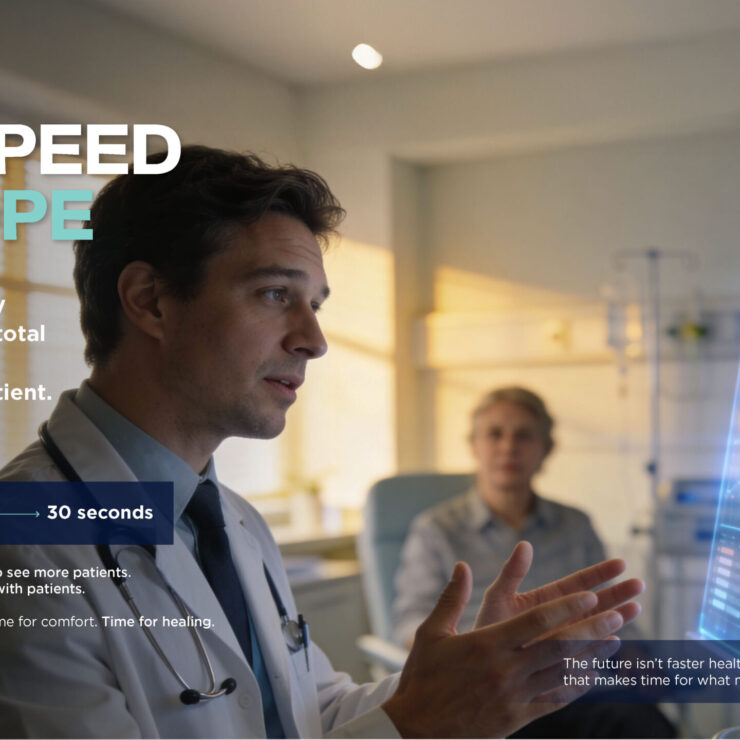
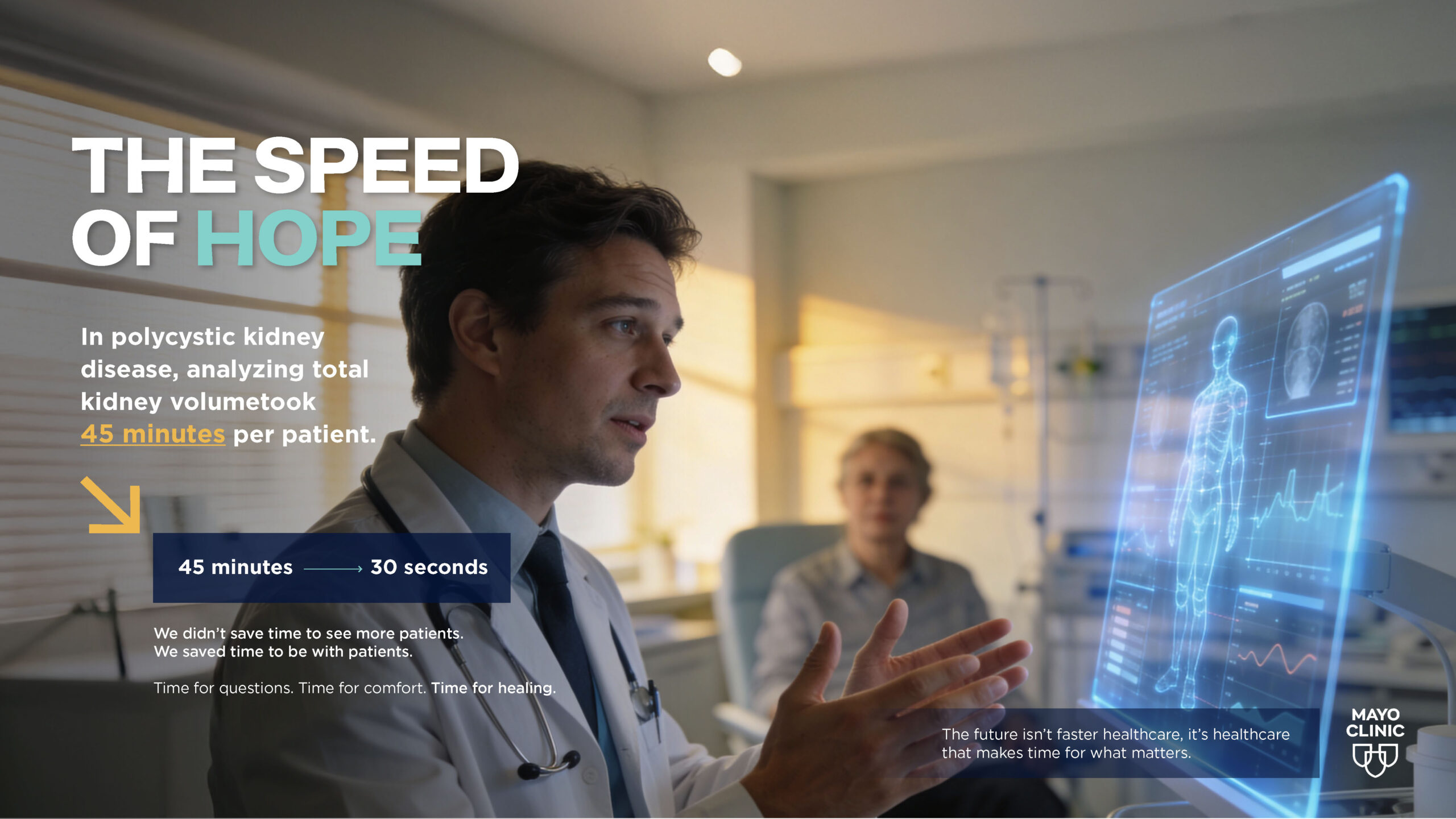
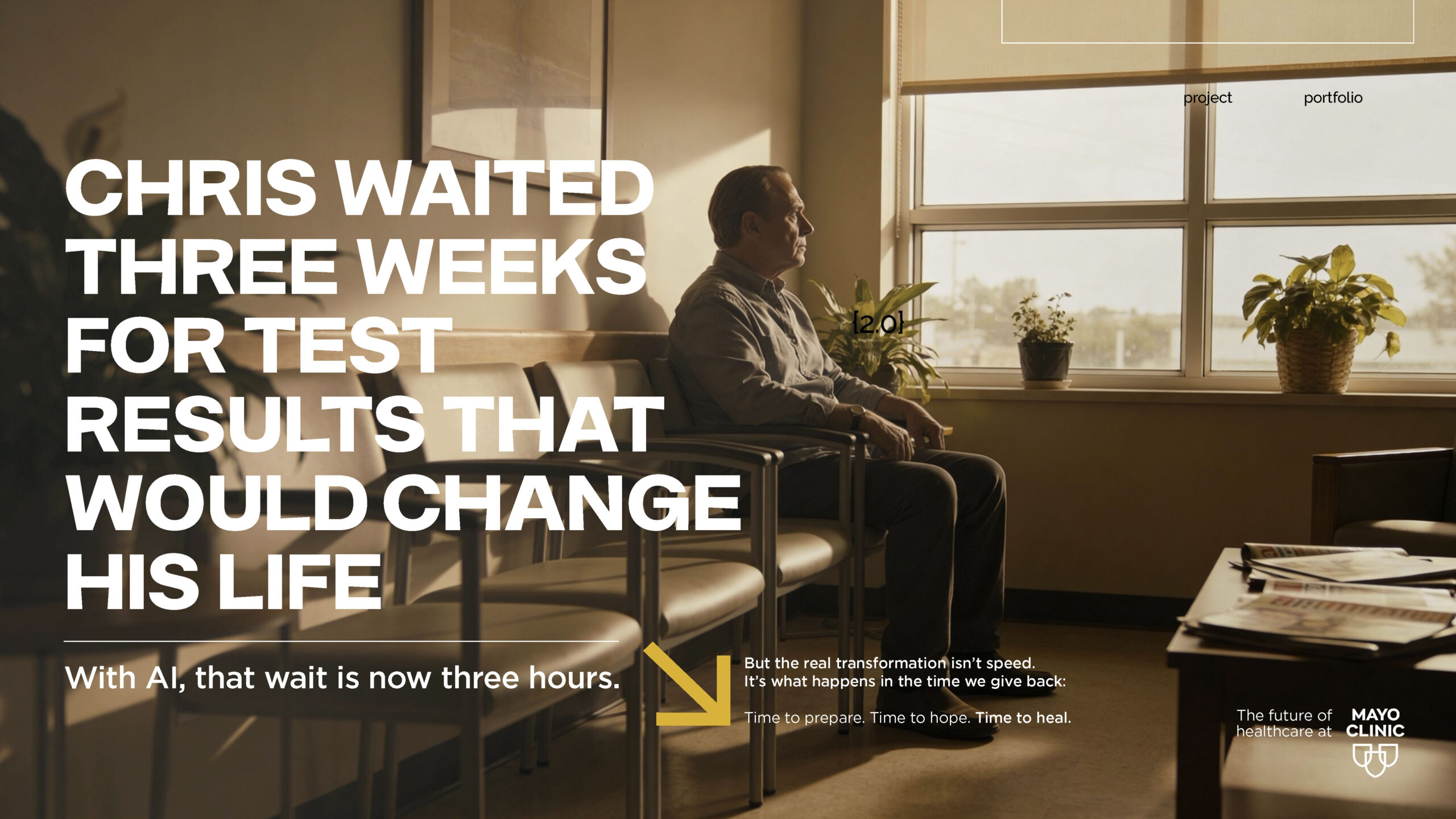
This project was developed as part of an art direction application for Mayo Clinic Research. More than a traditional design test, it was a real-time evaluation of how ideas are built, communicated, and executed under pressure—balancing speed, clarity, and creative intent.
The challenge focused not only on the final visual outcome, but on the thinking behind it: how quickly concepts could be translated into meaningful design, how tools were leveraged efficiently, and how emerging technologies like AI were integrated into the workflow without compromising quality or authenticity.
Approach
& Defining
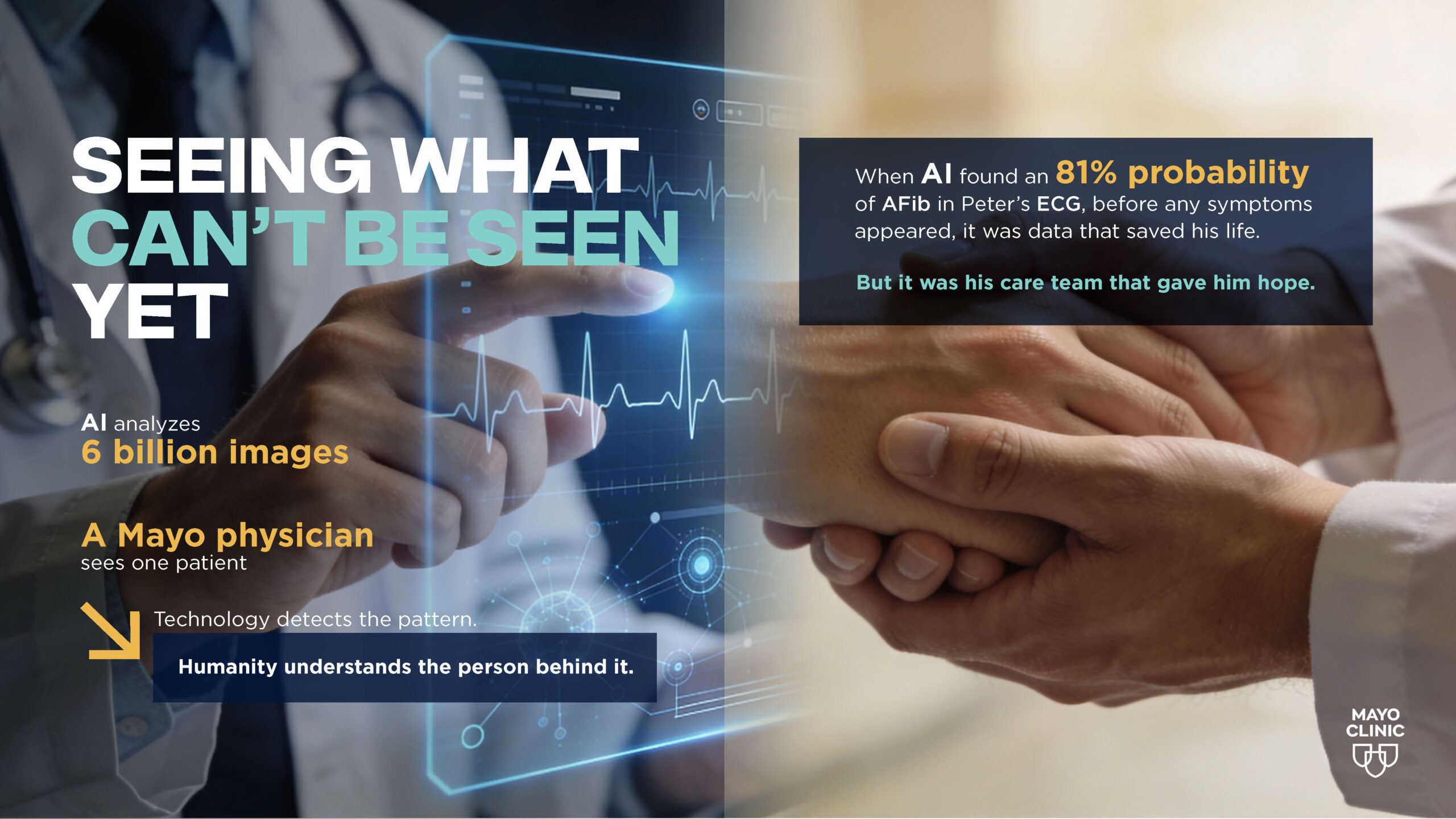
I approached the exercise as a situational framework—prioritizing clarity of message, visual hierarchy, and emotional resonance. The goal was to create work that felt both human and precise, aligning with the trust and credibility expected from a brand like Mayo Clinic.
AI played a key role in accelerating early-stage exploration, from ideation to visual references, allowing for faster iteration and decision-making. This was combined with traditional design tools to refine, curate, and elevate the final output.
Process
& Tools
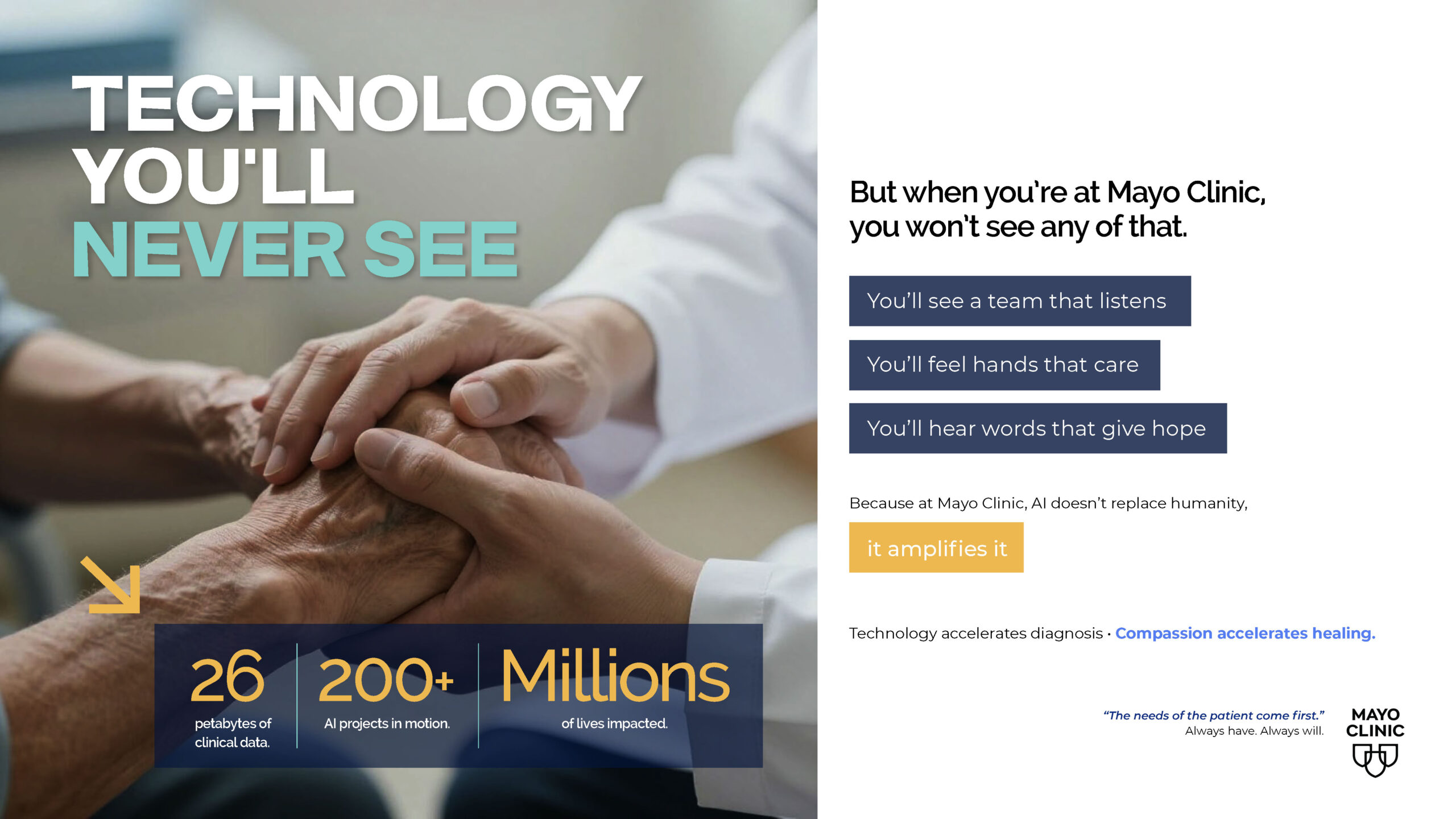
The process was intentionally agile. Initial concepts were developed rapidly using AI-assisted exploration, then shaped and refined through design software to ensure consistency, balance, and brand alignment.
This hybrid workflow allowed me to move quickly without losing control over the craft, bridging intuition, strategy, and execution in a cohesive way.
AI played a key role in accelerating early-stage exploration, from ideation to visual references, allowing for faster iteration and decision-making. This was combined with traditional design tools to refine, curate, and elevate the final output.
Outcome
The result is a series of visual directions that communicate clarity, trust, and innovation, key attributes within the healthcare and research space. More importantly, the project reflects an adaptive mindset: the ability to evolve with new tools, respond to changing demands, and maintain a strong creative vision throughout.
Reflection
& solutions
This experience reinforced how the creative industry continues to evolve. The integration of AI is not about replacement, but enhancement, expanding possibilities, accelerating workflows, and reshaping how ideas come to life. HACR
Projects like this highlight the importance of staying flexible, curious, and intentional, combining technology with human insight to create work that is both efficient and meaningful.